Tuesday, 4 February 2014

Texas Chainsaw Massacre 1974 Opening Sequence

The video below is the last of the three horror openings I will be analysing, and is the opening to the original Texas Chainsaw Massacre, considered one of the best horrors ever made.


This is a great opening sequence, simple yet creepy, and great at building tension. The sequence doesn't show much, avoiding the murderous rampages or tedious jump scares that plague so many modern horror openings. Instead we are treated to a quick background of the true story, some flashes of a body, and a close up of corpse, from which the camera slowly zooms out. This allows the opening to creep out the audience with the opening, while at the same time keeping the source of the horror a mystery. This is something I wish to replicate in my own opening, creating tension whilst also maintaining mystery. The quick flashes of the body are effective, showing bits of the corpse and then hitting you with it at the end, creating a great moment of horror. This is something I mentioned in the Dexter opening sequence, where bits of Dexter are shown through out, and then we seem him fully at the end. On that post I mentioned that if this was done in a horror film it could be done to great effect, as seen here. This is an idea I could use to great effect within my own opening to create tension and horror.

Sound also plays an important part. The voice over at the beginning is deadly serious and very creepy, helping to emphasise the fact it is a true story that is being portrayed. The radio at the end also has a menacing effect also helping to sell the fact it's based on a true story. Furthermore, the percussion on the zoom out adds to the atmosphere and the creepiness. However, as I have stated I will be avoiding music and instead relying on natural sounds.


Monday, 3 February 2014

Props

The following list is of the props that we will be using for the opening sequence. A major theme within the props is danger, they highlight the possibility of danger and add to the tense atmosphere.


Gun: The first prop is a gun. The gun shows that the character needs to protect themselves, provoking a sense of danger.


Gas Mask: The prop gas mask also adds to the sense of danger, showing the area is hazardous. Furthermore, it adds mystery to the main character by covering their face.


Hazmat Suit: This prop has the same effect as the gas mask. It shows the area is hazardous, adding to the sense of danger, and makes the character more mysterious by covering them up.


Tuesday, 28 January 2014

Target Audience: Teenagers

Audience research is important to show who you can appeal your film to, allowing you to make and advertise your film accordingly.

A large portion of horror film audiences are teenagers, as they are the main target audience of a large amount of modern horror films. Many modern horror films feature a group of dim witted teens falling victim to a murdering maniac, or the kid they bullied at school posing as a monster, so he can scare and then butcher them for revenge. This kind of horror is referred to as teen horror, or slasher horror. The young cast means teenagers can relate to the characters, and the plot of a person or creature killing them off is easy to follow, making slashers and teen horror films perfect for teenagers looking for an easy film to watch in the cinema or at a movie night with friends. Examples of these films include: Friday the 13th, Sorority Row, the more recent Texas Chainsaw Massacre films. Evidence these films are aimed at teenagers and young adults can be found on IMDB, where 29240 of the 57952 of the people who voted, are aged 18-29.


However, I will be avoiding this type of horror, opting for something more tense and suspenseful. I will be taking elements from this genre though, as it is popular with young audience, and so the borrowed elements may attract viewers from that audience. The main element I will be borrowing is the presence of a killer. However, the killer will be unseen throughout, leaving it's appearance and motives to the audience to interpret.

Thursday, 23 January 2014

Halloween Opening

The following video is the opening sequence to John Carpenters horror classic Halloween, released in 1978. 


The fact it is filmed in point of view (pov), makes it more suspenseful, as you cannot see the killer, but you can see what he sees. This is tense, as you can witness the killers progress through the dark house as he slowly moves in for the kill. The tense pov is effective, and pov is something I wish to utilize in my own opening sequence, keeping the killing force a mystery, whilst also letting the audience know the killer is present. The constant synth in the background further adds to the suspense of the sequence, however, i believe silence or relying on natural sounds will be far scarier, creating an unsettling mood of silence with the occasional snap of a twig.

What makes the pov further effective, is it allows for the big reveal at the end of the sequence, whilst also allowing you to see the brutal murder. Pov helps to further add to the brutality, as seen in the recent film Maniac, which is completely filmed in pov. All in all I will draw from Carpenters effective use of pov to create tense shots from the view of the killer.

Monday, 20 January 2014

Preliminary Task


This is my groups preliminary task, in which we had to display three different filming techniques.

The first technique is shot reverse shot. This is seen at the end of the clip during the conversation, in which the camera switches between the two people speaking. This is a useful technique to use in conversation as it allows the speaker to be tracked, it is also useful for building suspense, showing a character in horror, then showing the viewer what they are looking at, and then returning to the character for the final reaction.

The next rule is match on action. This can be seen when the first person walks through the door. The camera shows the person opening the door  from one side, and then coming through on the other. This rule is good for keeping a film consistent, and avoiding mistakes.

The final rule is the 180 degree rule, which is seen most clearly at the end during the conversation. The 180 degree rule keeps the action within a 180 degree view of the camera, and the view is only changed with pan or follow shots, and not quick cuts. This also helps to keep a film consistent, maintaing a natural view for the audience, and avoiding confusing them.

Thursday, 12 December 2013

Inspiration: John Carpenter

John Carpenter is a director most famous for his contributions to the horror genre with his films Halloween (1978) and The Thing (1982).  His films, especially Halloween, will serve as inspiration to use for my own horror film opening sequence.


John Carpenter started off his Directing career with a number of short films throughout the 60s, starting with Revenge of the Colossal Beasts in 1962. His short films were mostly science fiction and fantasy, and three were about giant monsters, namely Godzilla and Gorgo. His first feature film was Dark Star in 1974, which was followed by his next film Assault on Precinct 13 in 1976. However, it was his third film, Halloween, which finally established him as a great horror director.

Halloween was a huge success. Filmed in under a month on a minimal budget, Halloween is one of the most profitable and iconic horror films ever made. It will serve as my main inspiration, due to its great use of practical effects and the way it creates suspense, all on a small budget. Halloween was followed a couple of films later by another Carpenter classic - The Thing in 1982.

Other horror films by Carpenter include The Fog in 1980, Prince of Darkness in 1987, and The Ward in 2010. He is also better known for his collaborations with actor Kurt Russell, in Escape From New York and Escape From LA, as well as Big Trouble Little China. He is also responsible for the cult classic social commentary piece They Live in 1988, in which Roddy Piper established the film with the line: "I have come here to chew bubble gum and kick ass, and I'm all out of bubble gum".

Overall Carpenter is a great director, whose films are generally unappreciated on release, but now many are classics and will serve as inspiration.

Tuesday, 10 December 2013

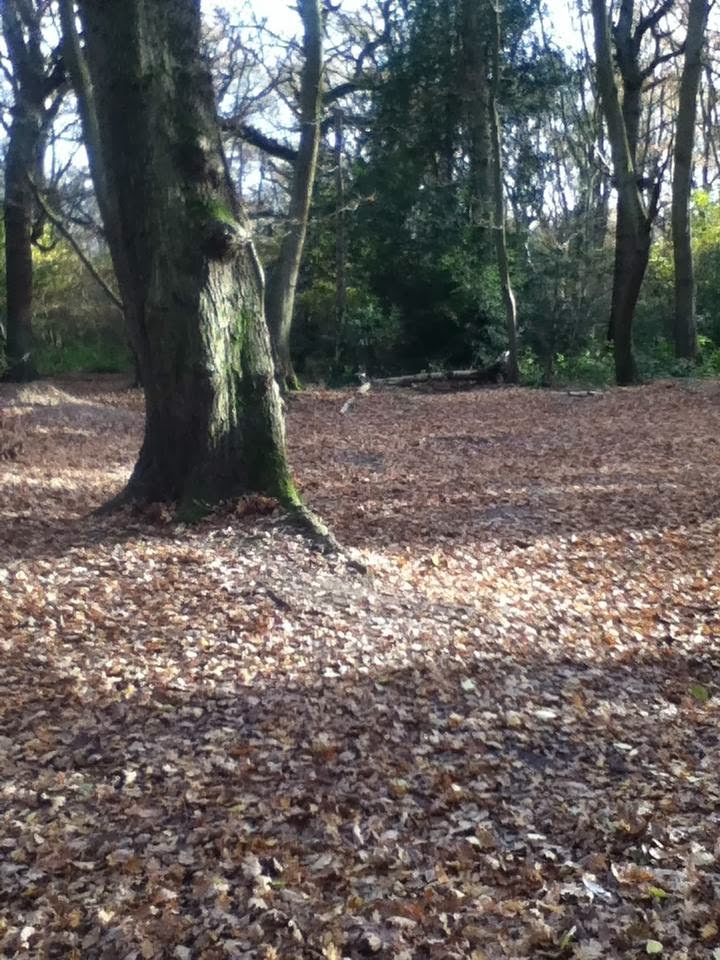
Location


As our sequence will be within the horror genre, a prime location is woodland areas. Below are some shots of a potential filming location: